
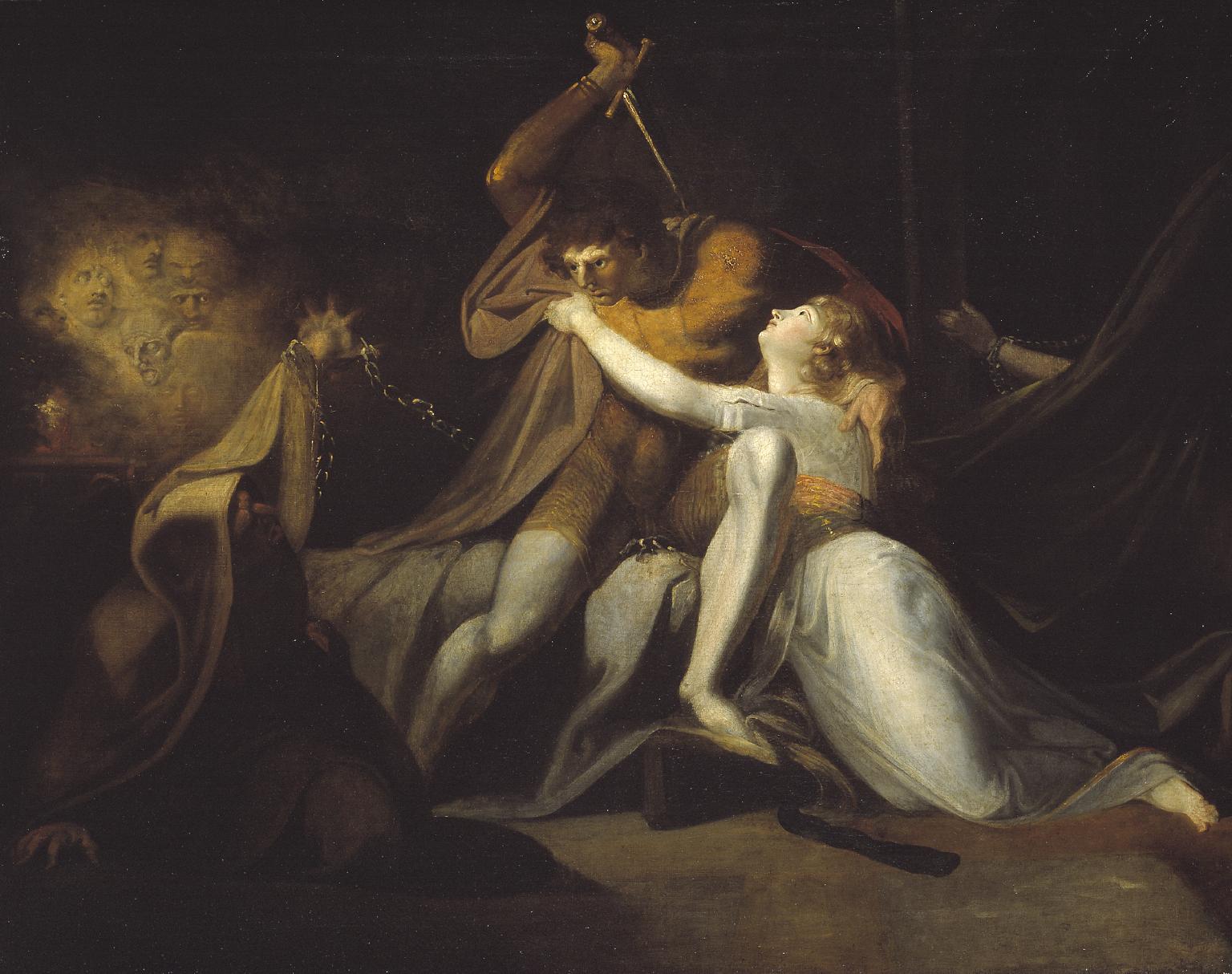
You see before you a painting exhibited by Henry Fuseli at the Royal Academy in 1783. Stylistically it is typical, to some extent, of what you would expect of the late 18th century.
The subject makes it unique. Convention dictated known allegory as the source of inspiration for the visual artist. It was expected the viewer would instantly recognize the subject and come to an understanding of the artist’s work through a familiar narrative.
Fuseli called this work “Percival Delivering Belisane from the Enchantment of Urma” adding a note for the Academy visitor, “see the tales of Thyot”.
It is said that Lord Byron spent days searching through his library seeking the source for this legend. When confronted, Fuseli admitted he had just made the whole thing up.
Is this true? Well, I can’t say for sure, but it does make a good story.
Uniquely, Fuseli’s dark and brooding work departed from the known allegorical and broached the barrier of the imagination. He had forsaken the familiar grand heroic narrative driving his own imagination into a dark nightmare. Heroism had become fear.
Will Percival succeed in his rescue or are the odds just too great? What are the terrible things behind him and are they victims or foes? Has he travelled deep underground? Will he succumb to the darkness?
Horace Walpole had loosed the literary Gothic onto the world 19 years prior with his, “The Castle of Otranto”. Fuseli had loosed upon the world the visual Gothic imagination bringing an unsettling feeling of terror to those who gazed upon his portrayal of uncertainty and fear.
